Crest Marine Services

Loading

Survey
Learn more about our partnership with Classic Boat Surveys to offer professional marine surveys.
Fault Finding
Learn more about our engineer’s background in electrical fault finding.
Design
Find out more about our electrical system design services for boats.
Build/Rewire
Find out more about our marine electrical installation and rewire services.

Powering boatsKeeping crews happy

Sectors and services

Crest Marine Services, a trusted marine electrician in Cornwall, provides expert electrical and electronic solutions for boats up to 24 meters—specializing in design, rewiring, upgrades and maintenance across Cornwall and the South West.

What’s HappeningWhat’s HappeningWhat’s Happening

Yarns from the Cornish
Deep

Welcome to the Crest Marine Services Blog: read on for updates on the jobs we’ve tackled and the latest news from the waterfront. From electrical fixes to full system upgrades, find out what we`ve been doing to keep boats ready for what ever the sea throws at them.

  • Nov, Mon, 2025

Paradox 3: Even a Fastnet Winner Needs a Helping Hand
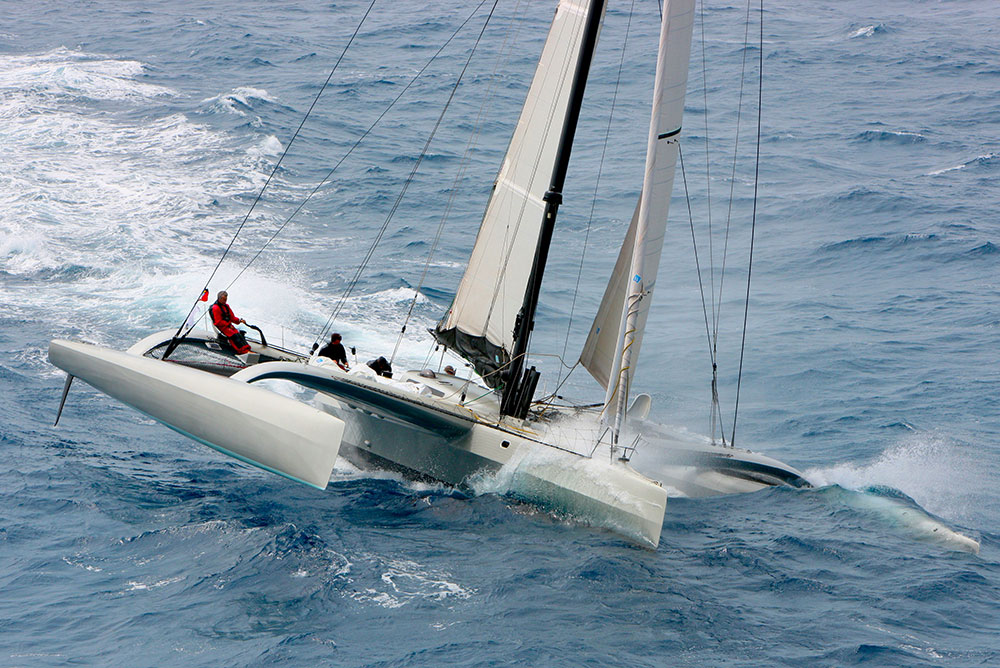
Photo courtesy of TimWright

There are some boats that make you smile the moment you step aboard, and Sophia, formerly Paradox 3, is definitely one of them. A striking Nigel Irens designed trimaran with real offshore pedigree. This Fastnet winner looks fast even tied up. But even elite boats have their off days. Due to their workload I was contacted by River Boatyard to assist with locating a fault on the antenna feeder that was causing issues with the VHF and AIS. What followed was a day of marine electronics troubleshooting in Falmouth on a remarkable boat.

I tested the feeder at multiple points, everything checked out perfectly. Once the VHF was transmitting correctly, it became clear that the real issue was missing GPS data across multiple systems: VHF, AIS, radar, and the onboard computer. So I set to work tracking down the cause of the problem.

The absence of GPS data to the VHF, turned out to be a deceptively simple fix: a DSC mayday message notification was hiding the coordinates. Once cleared, the correct Lat/Long reappeared and the VHF was fully operational.

On to the AIS. This receives its GPS information via the onboard computer, which also wasn’t showing GPS data. After confirming the GPS signal was reaching the computer this started to look like a software issue. After restoring the Starlink internet connection, we contacted the boats Engineer who was able to remote access the system to begin his fault-finding whilst I moved on to the radar.

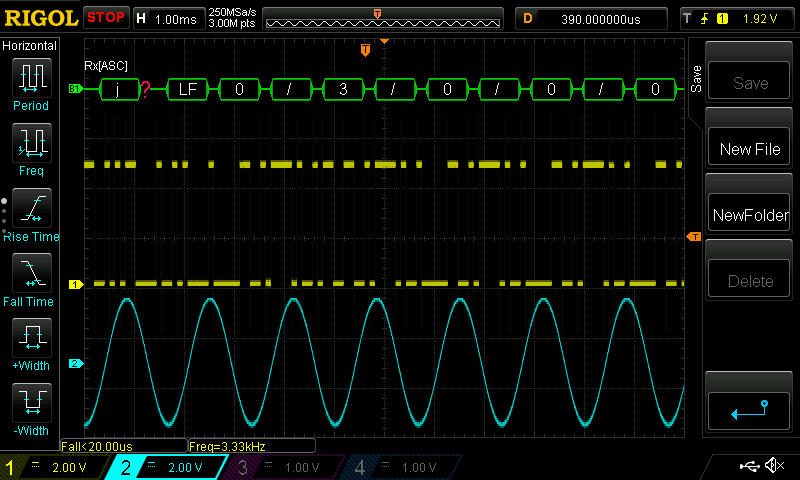
The mast had recently been removed and refitted, so I checked the connections were all correct which with the exception of a poor ferrule connection and some very minor corrosion they were. The GPS data was displaying intermittently. To get to the bottom of the GPS dropout, I pulled out the oscilloscope, the best tool when you really want to see what’s happening inside the data lines. By probing the GPS signal directly at different points in the system, I could decode the NMEA data stream in real time. What I found was telling. The GPS signal arriving at the NMEA amplifier was strong and healthy. After passing through it, the signal feeding the radar was dropping to a weak trickle. When the radar was connected to a channel of the amplifier with a strong signal, the voltage sagged dramatically. This strongly suggests the radar was dragging the signal down, pulling just enough power from the line to make the GPS data unreadable.

While I worked on the connections and traced the signal, the remote engineer reset the onboard systems, which restored the missing GPS data to the computer and AIS. A quick check of Marine Traffic showed Paradox tied to the pontoon in Falmouth.
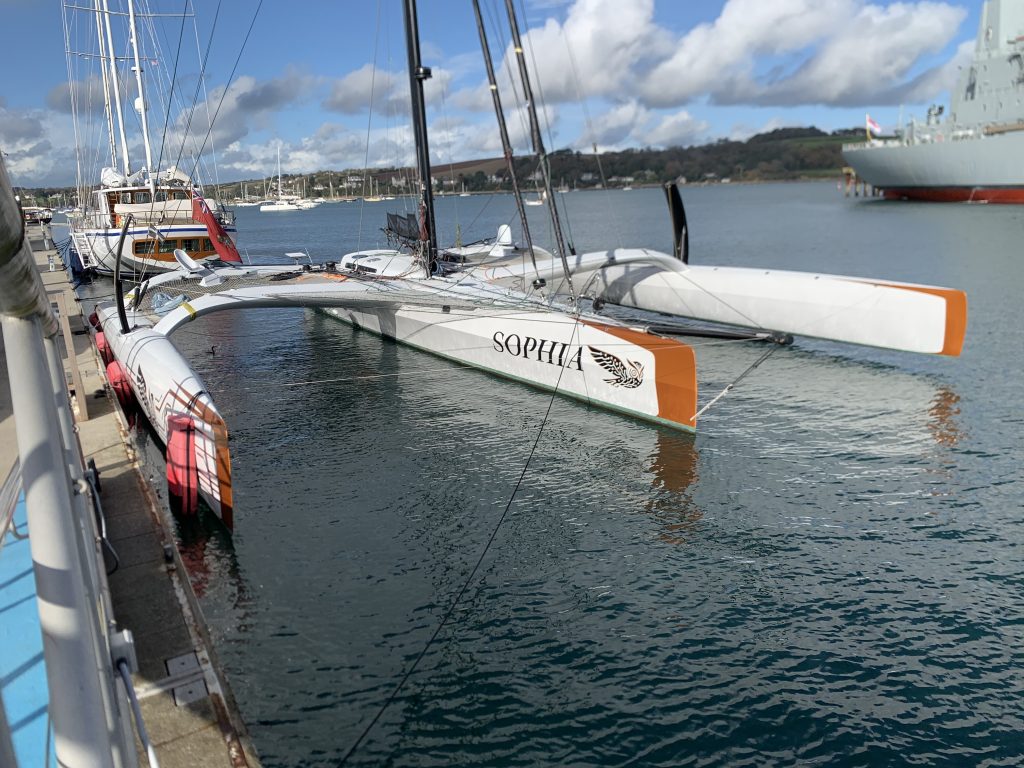
Even on a day spent fault-finding, Paradox 3 is a boat that leaves an impression. Sleek, fast, and full of personality, she’s the kind of trimaran that makes you appreciate the engineering behind her, and the quirks that come with it.

Whether she’s racing offshore or tied up in Falmouth for maintenance, she’s a reminder that even the most capable boats rely on a delicate dance of systems working together. And when one of them stumbles, the chase to find the fault can be just as fascinating as the fix. I do hope next time I visit this incredible boat we get to take her for a shake-down sail, just to check everything is working correctly, of course.
  • Aug, Sun, 2025

Water Rescue Training with SARA in Lydney

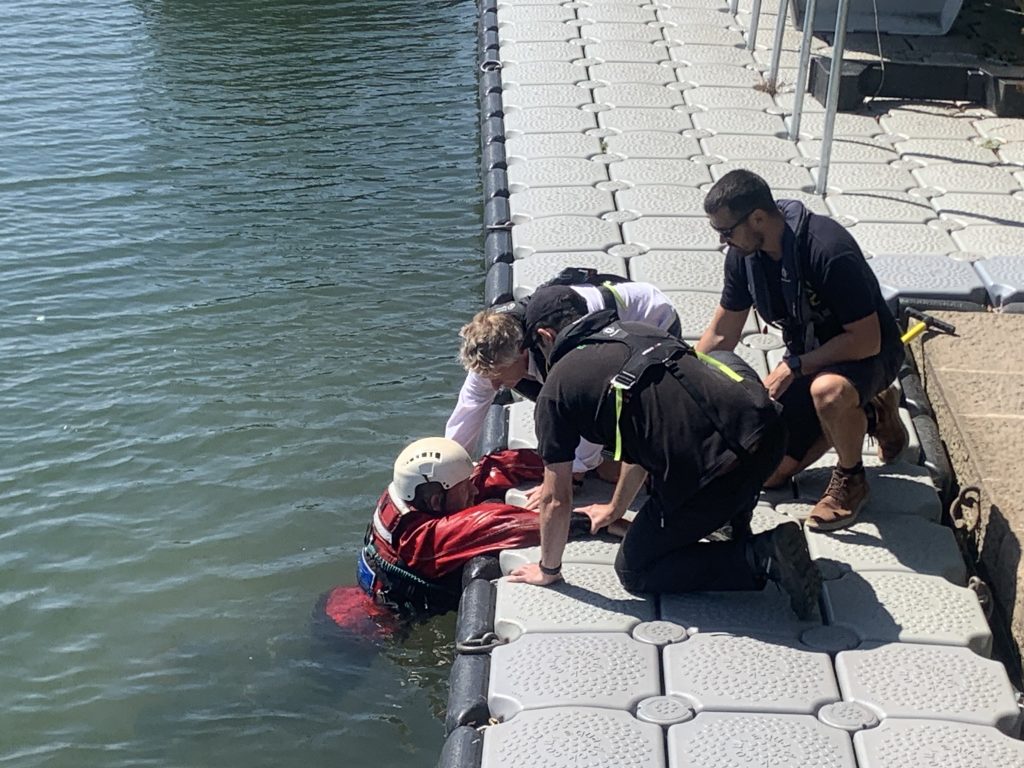
At Crest Marine Services, safety on and around the water is at the heart of what we do. Last week, I had the opportunity to join a day’s water rescue training in Lydney with the Severn Area Rescue Association (SARA) an invaluable experience that deepened both my skills and respect for those who dedicate their time to saving lives.

The course took place under blue skies and bright sunshine, with my fellow trainees being a team from the Environment Agency. While the conditions were calm, the training scenarios were designed to prepare us for the far more challenging situations that real incidents can bring.

We began the day with discussions on how to approach a water rescue, covering scene assessment, hazard awareness, and coordination with other emergency services. A key focus was on personal protective equipment, including the correct selection, inspection, and use of lifejackets and buoyancy aids, ensuring both rescuers and casualties remain as safe as possible during an incident.

First aid was also a central part of the morning, in many real-life rescues pulling someone from the water is only the start. We explored best practice for first responders and how to provide immediate care until further help arrives.

The afternoon moved into practical training, putting the theory into action with the deployment of lifebuoys, throwlines, and reach poles. These hands-on exercises allowed us to test techniques, work under time pressure, and gain confidence in using specialist rescue equipment effectively.

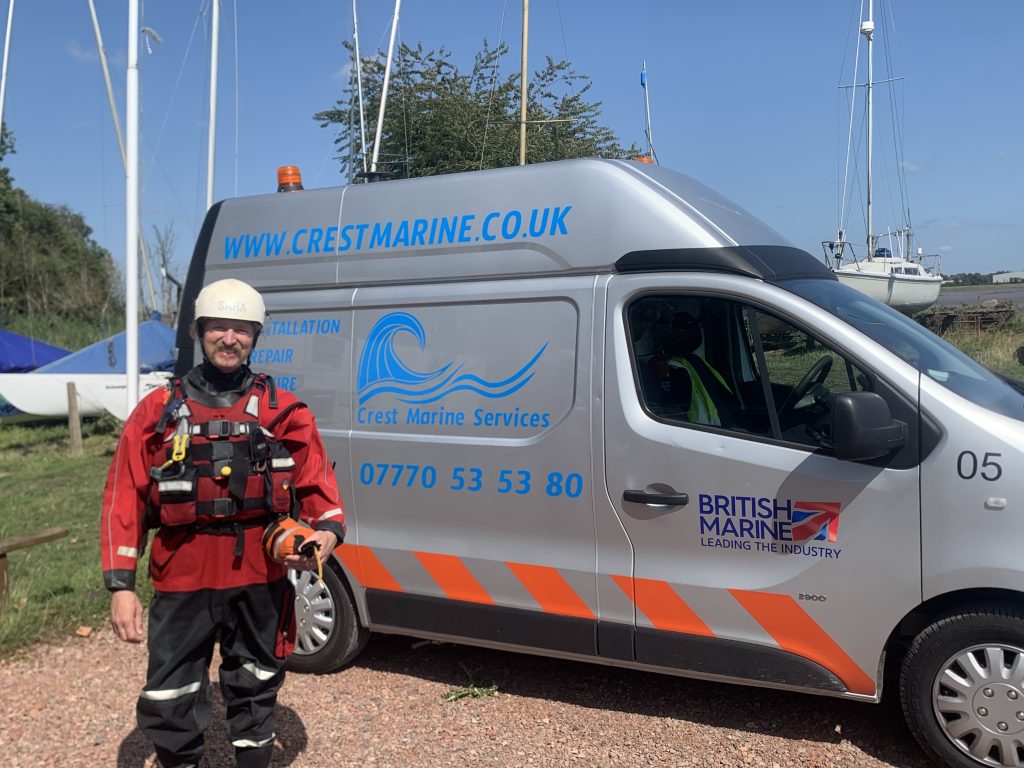
Preparedness doesn’t stop when the training ends. My own van carries a rescue throwline ready for immediate use in an emergency part of our ongoing commitment to being able to assist quickly and effectively should the unexpected happen.

It was an excellent day of learning, made even better by the expertise and professionalism of the SARA trainers. Whether it’s responding to emergencies, maintaining safe operations, or simply being prepared for the unexpected, training like this ensures we’re ready to help keep people safe on the water.

A big thank you to the SARA team for their dedication and knowledge and to the Environment Agency staff for being great training partners.

  • Aug, Sun, 2025

Powering Up for a 10 year Circumnavigation

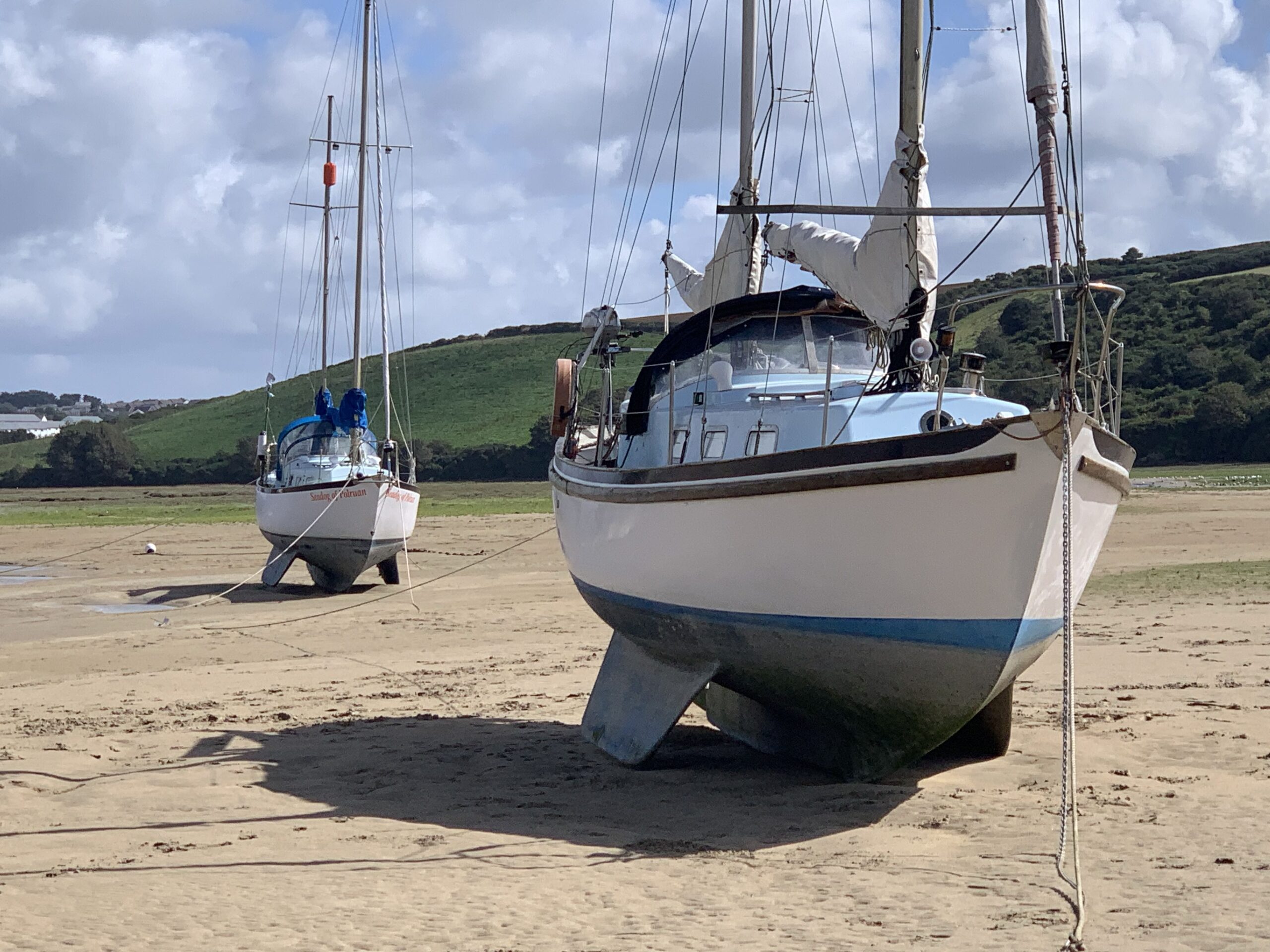
At Crest Marine Services, we pride ourselves on delivering reliable, safe, and creative solutions for complex electrical issues afloat. One of our recent callouts came from the skipper of Shadowfax, a yacht preparing for a ten-year circumnavigation, and just three days from departure.

The problem? The vessel’s inverter wouldn’t run the calorifier’s immersion heater. The setup worked fine from shore power and the generator, but the inverter refused to cooperate, despite the live being properly connected. It was clear this wasn’t a basic fault.

The skipper had already spoken to a few marine electricians, who suspected a neutral issue but declined to get involved. That’s understandable. Neutral faults can be notoriously tricky to diagnose and fix. With a fault on the live, you can easily verify voltage and track the problem. On the neutral side, though, things are far less straightforward. Fault finding gets technical very quickly, and with time running short, mistakes weren’t an option.

After a detailed discussion with the skipper about how the system was originally designed, how it needed to function, and what protections were in place, we got to work. We spent time fault finding and carefully evaluating the wiring setup. Once we confirmed that all necessary protections were present, we re-wired the relevant circuits so the immersion heater could run safely from the inverter when needed.

To help protect the house battery bank, we also installed a timer module — a simple but effective safeguard to prevent the heater being accidentally left on and draining power when underway or at anchor.

We wish the skipper and his family the very best as they begin their ten-year voyage around the world aboard Shadowfax. It was a pleasure to help them get one step closer to departure.

Fair winds and following seas.