
Paradox 3: Even a Fastnet Winner Needs a Helping Hand
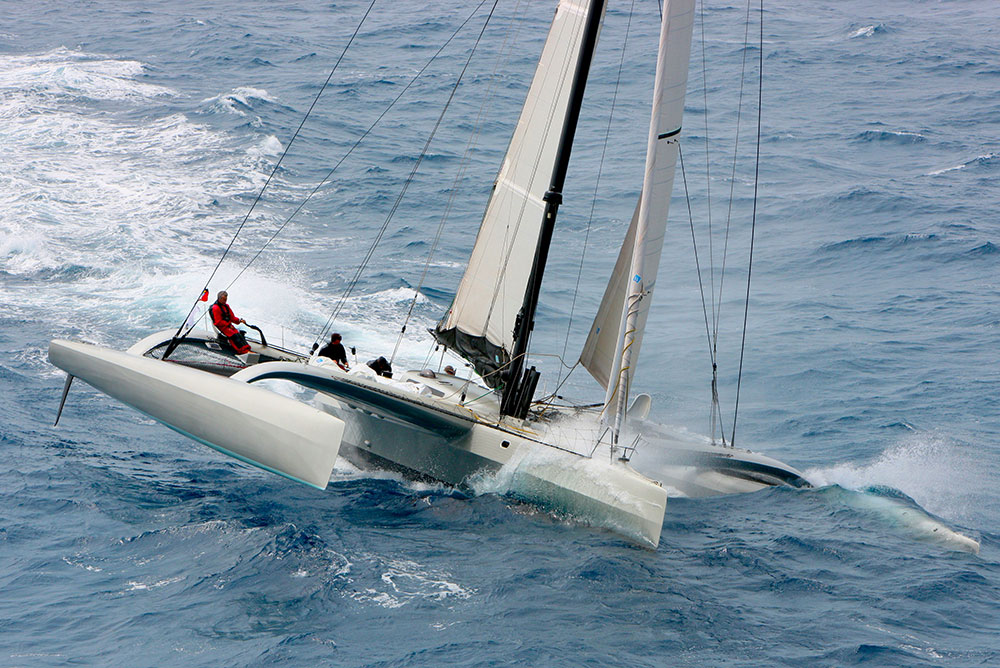
Photo courtesy of TimWright
There are some boats that make you smile the moment you step aboard, and Sophia, formerly Paradox 3, is definitely one of them. A striking Nigel Irens designed trimaran with real offshore pedigree. This Fastnet winner looks fast even tied up. But even elite boats have their off days. Due to their workload I was contacted by River Boatyard to assist with locating a fault on the antenna feeder that was causing issues with the VHF and AIS. What followed was a day of marine electronics troubleshooting in Falmouth on a remarkable boat.
I tested the feeder at multiple points, everything checked out perfectly. Once the VHF was transmitting correctly, it became clear that the real issue was missing GPS data across multiple systems: VHF, AIS, radar, and the onboard computer. So I set to work tracking down the cause of the problem.
The absence of GPS data to the VHF, turned out to be a deceptively simple fix: a DSC mayday message notification was hiding the coordinates. Once cleared, the correct Lat/Long reappeared and the VHF was fully operational.
On to the AIS. This receives its GPS information via the onboard computer, which also wasn’t showing GPS data. After confirming the GPS signal was reaching the computer this started to look like a software issue. After restoring the Starlink internet connection, we contacted the boats Engineer who was able to remote access the system to begin his fault-finding whilst I moved on to the radar.
The mast had recently been removed and refitted, so I checked the connections were all correct which with the exception of a poor ferrule connection and some very minor corrosion they were. The GPS data was displaying intermittently. To get to the bottom of the GPS dropout, I pulled out the oscilloscope, the best tool when you really want to see what’s happening inside the data lines. By probing the GPS signal directly at different points in the system, I could decode the NMEA data stream in real time. What I found was telling. The GPS signal arriving at the NMEA amplifier was strong and healthy. After passing through it, the signal feeding the radar was dropping to a weak trickle. When the radar was connected to a channel of the amplifier with a strong signal, the voltage sagged dramatically. This strongly suggests the radar was dragging the signal down, pulling just enough power from the line to make the GPS data unreadable.
While I worked on the connections and traced the signal, the remote engineer reset the onboard systems, which restored the missing GPS data to the computer and AIS. A quick check of Marine Traffic showed Paradox tied to the pontoon in Falmouth.
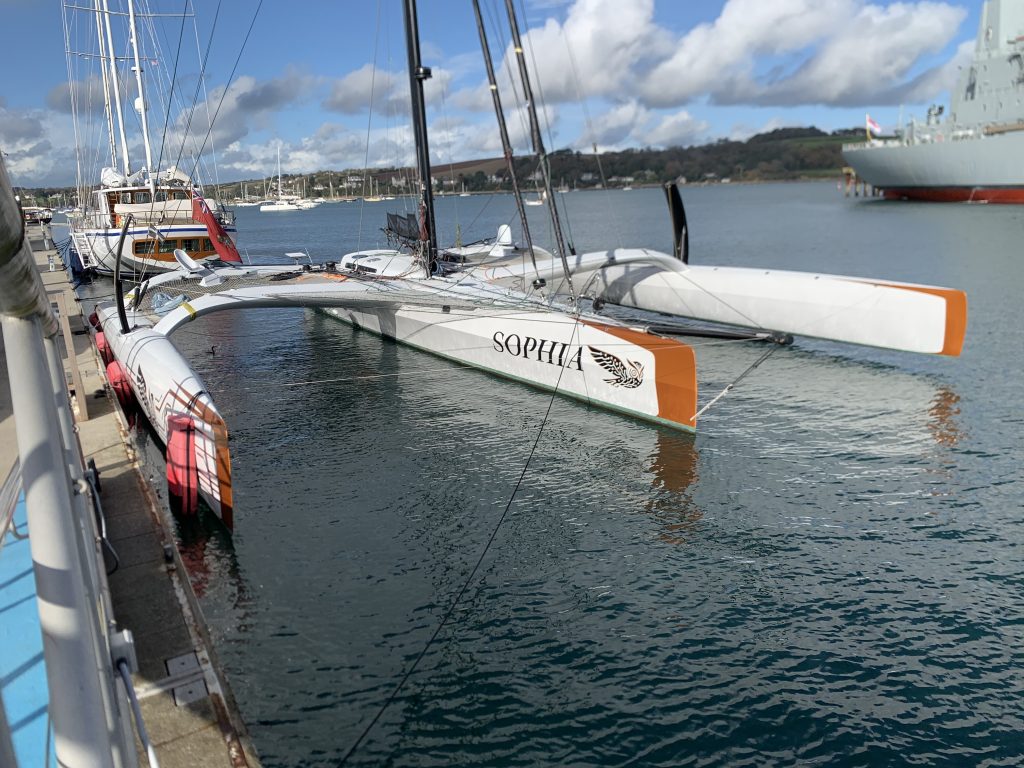
Even on a day spent fault-finding, Paradox 3 is a boat that leaves an impression. Sleek, fast, and full of personality, she’s the kind of trimaran that makes you appreciate the engineering behind her, and the quirks that come with it.
Whether she’s racing offshore or tied up in Falmouth for maintenance, she’s a reminder that even the most capable boats rely on a delicate dance of systems working together. And when one of them stumbles, the chase to find the fault can be just as fascinating as the fix. I do hope next time I visit this incredible boat we get to take her for a shake-down sail, just to check everything is working correctly, of course.